Cloud Migration Project
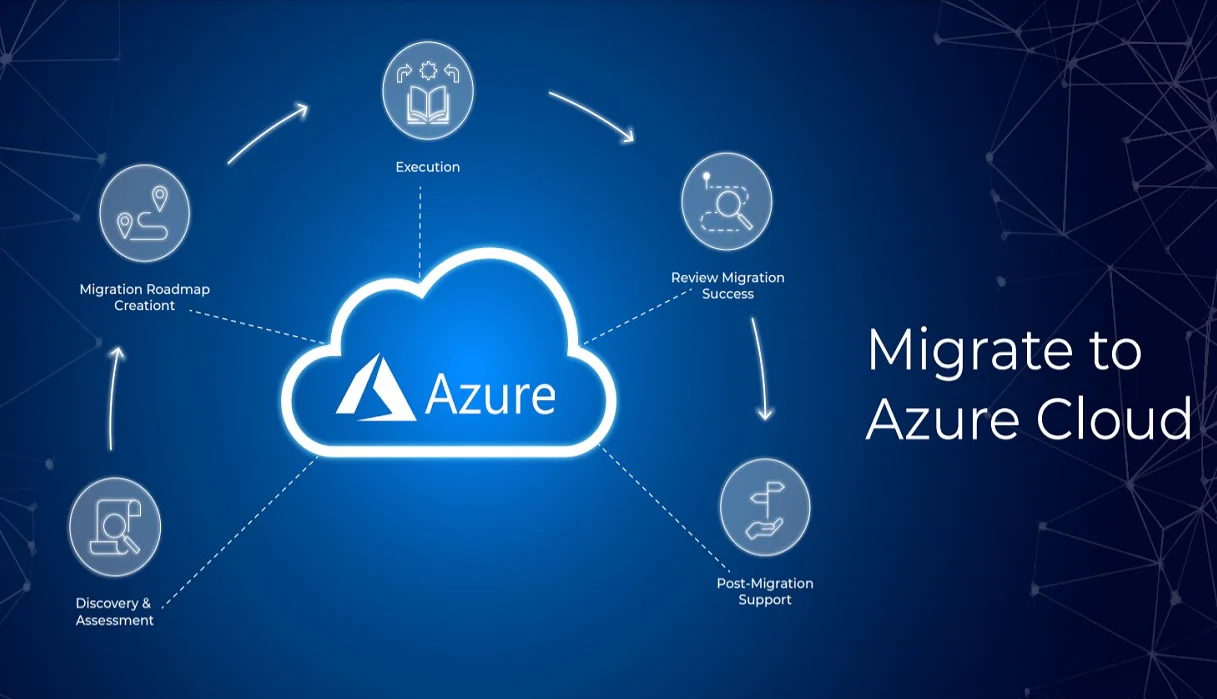
On-Premise to Azure/M365 Infrastructure Modernization
Company: Gold Business Technologies Ltd.
The company's IT infrastructure had evolved from a fragmented collection of on-premise VMware servers into a more consolidated VMware data center environment. However, maintaining physical hardware posed ongoing challenges: high maintenance costs, scalability limitations, downtime risks during physical relocations, and inefficiencies in disaster recovery. Lessons from past data center moves highlighted that physically relocating servers often disrupted users, increased costs, and introduced unnecessary complexity—making a full cloud migration the optimal path forward.
To address these issues, I led a comprehensive migration of the entire on-premise setup to the cloud, transitioning traditional Microsoft Active Directory, on-prem servers, and all VMware vCenter virtual machines (VMs) to Microsoft Azure and Microsoft 365.
Key Challenges & Migration Scope
- Legacy Environment:
- From their inception from being Disjointed VMware servers (independant workstations) to running critical workloads within a modern on prem IBM data center (e.g., web servers, databases, Active Directory domain controllers).
- Physical data center dependencies are complicated scaling, backups, and high availability.
- Migration Complexities:
- Converting multiple VMware vCenter VMs to Azure-native formats (e.g., using Azure Migrate for assessment, replication, and cutover).
- Ensuring zero-downtime for user-facing services, including seamless re-routing of web server traffic to cloud endpoints.
- Integrating with Microsoft 365 for identity management (e.g., syncing or migrating Active Directory to Azure AD/Entra ID).
- Hybrid elements: Selective use of Azure Storage for specific workloads (e.g., storage or compute) to optimize costs and performance.
- User & Business Considerations:
- Avoiding disruptions seen in prior physical moves, where outages affected productivity.
- Compliance with data sovereignty, security standards, and minimal reconfiguration for end-users.
Solution Design & Implementation
I orchestrated the end-to-end migration process, leveraging Azure and Microsoft Sync tools for a phased, low-risk rollout:
- Assessment & Planning — Used Azure Migrate and Microsoft Migration tools to inventory VMware VMs, assess dependencies, and simulate migration scenarios.
- VM Conversion & Lift-and-Shift — Converted all VMware vCenter VMs to Azure VMs or Azure VMware Solution (AVS) equivalents, handling OS conversions, storage migration (e.g., VMDK to VHD), and network reconfiguration.
- Identity & Directory Migration — Migrated on-premise Active Directory to Azure Active Directory (now Entra ID), enabling seamless single sign-on (SSO) integration with Microsoft 365 services (e.g., Exchange Online, SharePoint, Teams).
- Web Traffic Re-Routing — Implemented Azure Front Door or Application Gateway for global traffic management, with DNS updates and load balancers to redirect inbound web requests to cloud-hosted servers without perceptible downtime.
- Hybrid/Testing Phase — Maintained a temporary hybrid setup (on-prem + cloud) for parallel testing, using Azure Site Recovery for failover drills and Microsft Sync Tools for secure data transfer.
- Cutover & Optimization — Executed a seamless final cutover during off-peak hours, followed by post-migration optimizations (e.g., right-sizing resources, implementing auto-scaling, and setting up Librenms for ongoing performance tracking).
Business & Operational Impact
The migration transformed the infrastructure into a fully cloud-native setup, eliminating physical hardware dependencies and enabling elastic scaling, automated backups, and global accessibility. It reduced operational costs by 30-50% (through pay-as-you-go models), improved disaster recovery times from days to minutes, and enhanced security with built-in cloud features (e.g., Azure, Sync tools). Users experienced no major disruptions, avoiding the pitfalls of physical data center relocations, while the business gained agility for future growth.
The project demonstrated strong skills in:
- Cloud migration strategy and execution (Azure Migrate, Microsoft Sync Tools tools, VMware to cloud conversions)
- Identity and access management modernization (Active Directory to Azure AD/M365)
- Network architecture redesign for seamless traffic routing (DNS, load balancing, with some hybrid connectivity during migration)
- Risk-managed project leadership in complex, multi-cloud environments (Azure primary, and some prior on premise sync tools hybrid)
- Delivering cost efficiencies, reliability, and user-centric outcomes through lessons from prior infrastructure challenges
You should also read:
Automated Print Cost Recovery & Client Billing Integration
Print-to-Profit Solution
Company: Gold Business Technologies Ltd.
In professional services environments (particularly legal and consulting firms), printing, copying, and scanning costs represent a significant expense. Recovering these costs from clients—by accurately allocating usage to specific matters, clients, or departments—was historically manual, inconsistent, and prone to under-billing or disputes.
Continue reading...
Moneris Payment Gateway Integration for Online Invoice Payment
Drupal-Based Solution
Company: Gold Business Technologies Ltd.
Customers increasingly requested secure, non-PayPal options for paying invoices online. To meet this demand, the company selected Moneris as the payment processor. However, integrating Moneris into the existing infrastructure presented significant technical challenges due to an outdated website and legacy systems.
Continue reading...
Lottery Terminal Field Update & Rescue Toolkit
Custom Live Linux Distribution
Company: NCR Canada Ltd.
In the era before widespread high-speed internet, updating lottery terminal firmware or gaming software was extremely inefficient. Terminals used slow 1200 baud modem connections (often taking days for transfers), and the alternative—shipping specialized USB jump drives with EXT filesystem images—was costly, logistically complex, and incompatible with standard Windows systems.
Continue reading...