
Enterprise-Grade Home Lab: Multi-Tenant Network Simulation with Proxmox

Having fun with Proxmox
Company: Personal Project
Architected a Proxmox-based home lab utilizing Software Defined Networking (VNETs) to simulate complex, multi-subnet enterprise environments for testing high-availability clusters and network security protocols.
The Vision
To stay ahead of the curve, I designed and deployed a high-availability virtual laboratory. The goal was to move beyond simple virtualization and create a production-mimic environment where I could safely test complex deployments, security protocols, and network architectures.
The Architecture: Proxmox VE
I chose Proxmox Virtual Environment as the backbone for this project due to its robust KVM and LXC capabilities. This setup allows for:
Rapid Deployment: Using templates and linked clones to spin up testing environments in seconds.
Resource Management: Fine-tuning CPU pinning and memory ballooning to maximize hardware efficiency.
Storage Optimization: Utilizing ZFS for snapshots, allowing for "fail-fast" experimentation—if a configuration breaks, I can roll back the entire state instantly.
Advanced Networking: VNETS & Subnetting
A true lab isn't just about servers; it’s about how they talk. I implemented SDN (Software Defined Networking) within Proxmox to create a multi-zone environment:
VNET Implementation: Created isolated virtual networks to simulate different geographic branches or departmental silos.
VLAN Tagging & Routing: Mastered complex networking concepts by routing traffic between subnets, simulating real-world firewall rules and traffic flow.
Scalability: The architecture is designed to scale from a single node to a clustered environment without reconfiguring the core network logic.
Key Expertise Demonstrated
Hypervisor Management: Proxmox VE, KVM, LXC.
SDN & Virtual Networking: VNETs, Linux Bridges, VLANs, and Subnetting.
Systems Administration: Linux/Unix environment configuration and hardware resource allocation.
DevOps Mindset: Infrastructure as Code (IaC) readiness and rapid prototyping.
You should also read:

Automated Print Cost Recovery & Client Billing Integration
Print-to-Profit Solution
Company: Gold Business Technologies Ltd.
In professional services environments (particularly legal and consulting firms), printing, copying, and scanning costs represent a significant expense. Recovering these costs from clients—by accurately allocating usage to specific matters, clients, or departments—was historically manual, inconsistent, and prone to under-billing or disputes.
Continue reading...
Moneris Payment Gateway Integration for Online Invoice Payment
Drupal-Based Solution
Company: Gold Business Technologies Ltd.
Customers increasingly requested secure, non-PayPal options for paying invoices online. To meet this demand, the company selected Moneris as the payment processor. However, integrating Moneris into the existing infrastructure presented significant technical challenges due to an outdated website and legacy systems.
Continue reading...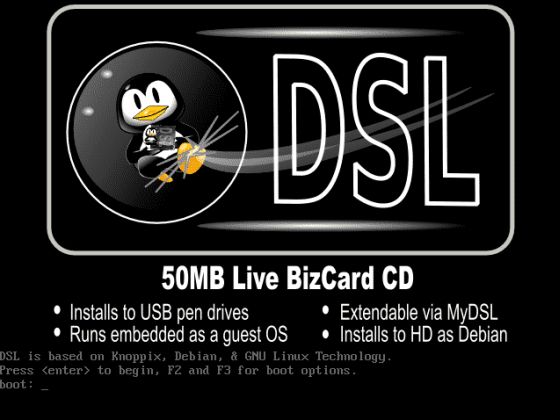
Lottery Terminal Field Update & Rescue Toolkit
Custom Live Linux Distribution
Company: NCR Canada Ltd.
In the era before widespread high-speed internet, updating lottery terminal firmware or gaming software was extremely inefficient. Terminals used slow 1200 baud modem connections (often taking days for transfers), and the alternative—shipping specialized USB jump drives with EXT filesystem images—was costly, logistically complex, and incompatible with standard Windows systems.
Continue reading...