
Lottery Terminal Field Update & Rescue Toolkit
Custom Live Linux Distribution
Company: NCR Canada Ltd.
In the era before widespread high-speed internet, updating lottery terminal firmware or gaming software was extremely inefficient. Terminals used slow 1200 baud modem connections (often taking days for transfers), and the alternative—shipping specialized USB jump drives with EXT filesystem images—was costly, logistically complex, and incompatible with standard Windows systems.
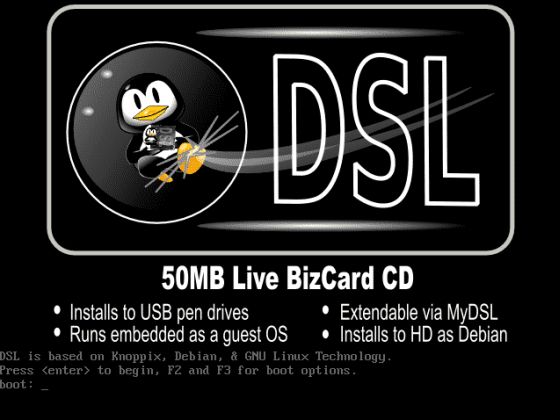
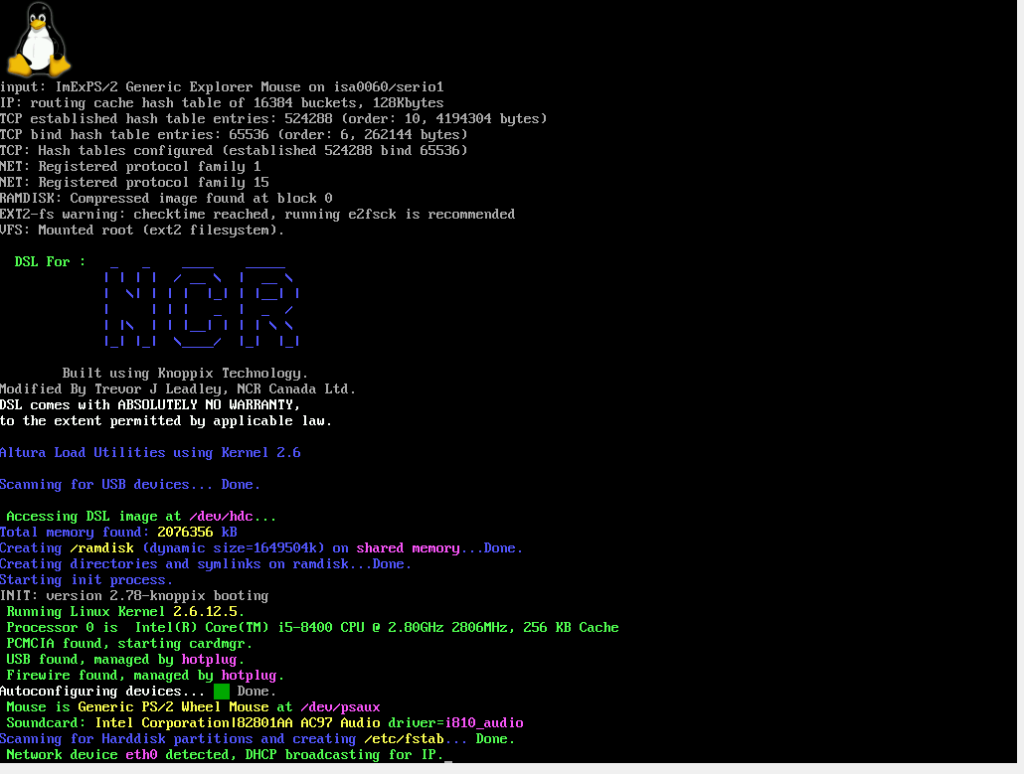
To overcome these limitations, I designed and built the Lottery Terminal Rescue Kit: a custom live Linux distribution based on Damn Small Linux (DSL), a compact, Knoppix-inspired distro known for running on minimal hardware and fitting on small media like business-card CDs. This toolkit served dual purposes: enabling field technicians to update firmware/software directly on-site via USB sticks, and allowing the service department to repair, replace, or factory-update the internal solid-state hard drives in terminals.
Technical Implementation & Features
- Base System & Remastering — Customized from Damn Small Linux, retaining its lightweight footprint, built-in tools (FTP/web servers, disk utilities), and broad hardware compatibility while stripping and adding components specific to BCLC lottery terminals.
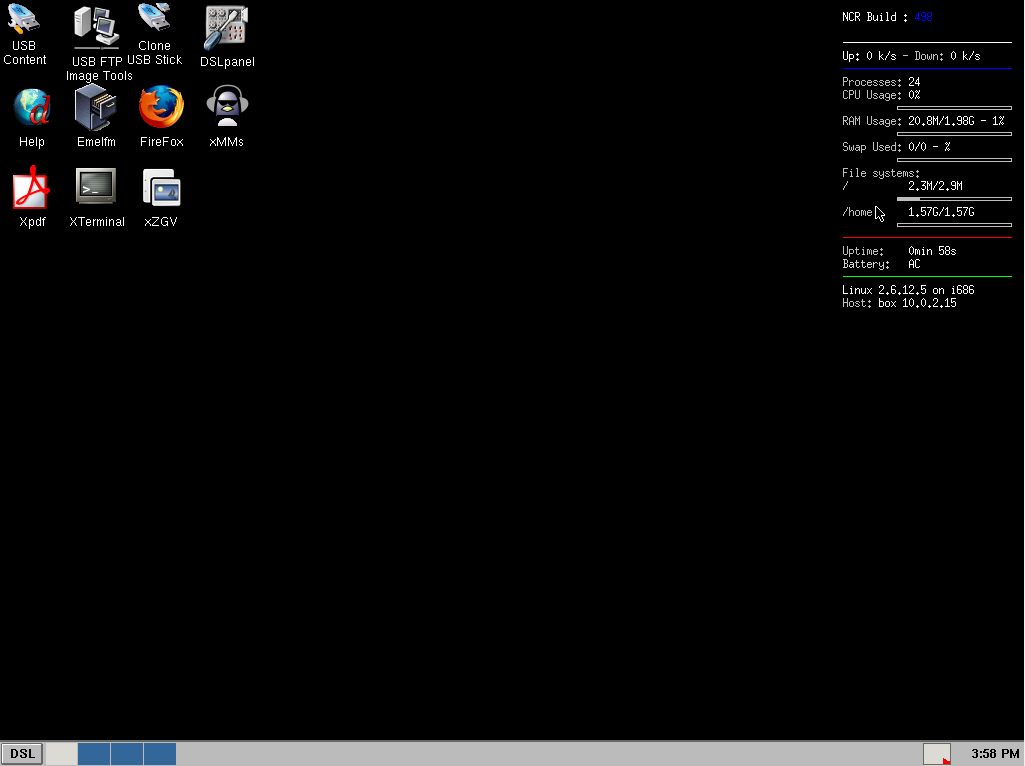
- User-Friendly Interface for Field Techs — Created scripted applications in Lua (a lightweight scripting language with C-like syntax and bash-like embeddability). These powered simple desktop user applications so non-Linux-savvy field service representatives could perform complex tasks without command-line interaction.
- Dual-Use Capabilities:
- Field Updates — Technicians booted the live system on a laptop or compatible device, connected a USB stick (the same type used for terminal updates), and used the toolkit's FTP client or local tools to download fresh firmware/software images. The kit then formatted, wrote, and verified the USB drive—allowing immediate on-site terminal updates without slow modem transfers or shipping delays.
- Service Department / Factory-Level Repair — In the repair facility, the toolkit enabled direct access to the terminal's internal solid-state drive for diagnostics, repairs, data recovery, or full firmware reflashing—mirroring factory processes but in a portable, field-adaptable format.
- Offline Support for Remote Sites — For locations with limited or no internet, prepared self-contained ISO images for each software release. These included embedded release notes, version details, and built-in verification steps so users could confirm successful updates.
Business & Operational Impact
By shifting updates from days-long modem downloads or expensive shipments to quick, on-site USB preparation and direct drive servicing, the Rescue Kit significantly reduced downtime, eliminated most physical media shipping costs, and empowered field teams to handle advanced maintenance independently. It bridged legacy hardware constraints with modern efficiency, delivering substantial savings and improved service reliability.
The project demonstrated expertise in:
- Linux live distribution remastering and customization (starting from Damn Small Linux)
- Lightweight GUI scripting with Lua for non-expert users
- Hardware-software integration for proprietary legacy terminals
- Multi-purpose tool design supporting both field and bench/repair workflows
- Cost-effective innovation in low-bandwidth, remote environments
The project highlighted rapid adaptation of open-source tools to solve proprietary hardware challenges, resulting in significant operational savings and improved service efficiency for NCR Canada Ltd.
You should also read:
Cacti Intropage Plugin Enhancement
Improved NOC Dashboard & Visual Monitoring Summary
Company: Gold Business Technologies Ltd.
As a long-time contributor and supporter of Cacti—a widely used, open-source network monitoring and graphing solution (often compared to Nagios for its flexibility and depth)—I identified an opportunity to improve one of its popular plugins.
Continue reading...
Automated Print Cost Recovery & Client Billing Integration
Print-to-Profit Solution
Company: Gold Business Technologies Ltd.
In professional services environments (particularly legal and consulting firms), printing, copying, and scanning costs represent a significant expense. Recovering these costs from clients—by accurately allocating usage to specific matters, clients, or departments—was historically manual, inconsistent, and prone to under-billing or disputes.
Continue reading...
Moneris Payment Gateway Integration for Online Invoice Payment
Drupal-Based Solution
Company: Gold Business Technologies Ltd.
Customers increasingly requested secure, non-PayPal options for paying invoices online. To meet this demand, the company selected Moneris as the payment processor. However, integrating Moneris into the existing infrastructure presented significant technical challenges due to an outdated website and legacy systems.
Continue reading...